Reducing DAST False Positives Without Hiding Risk
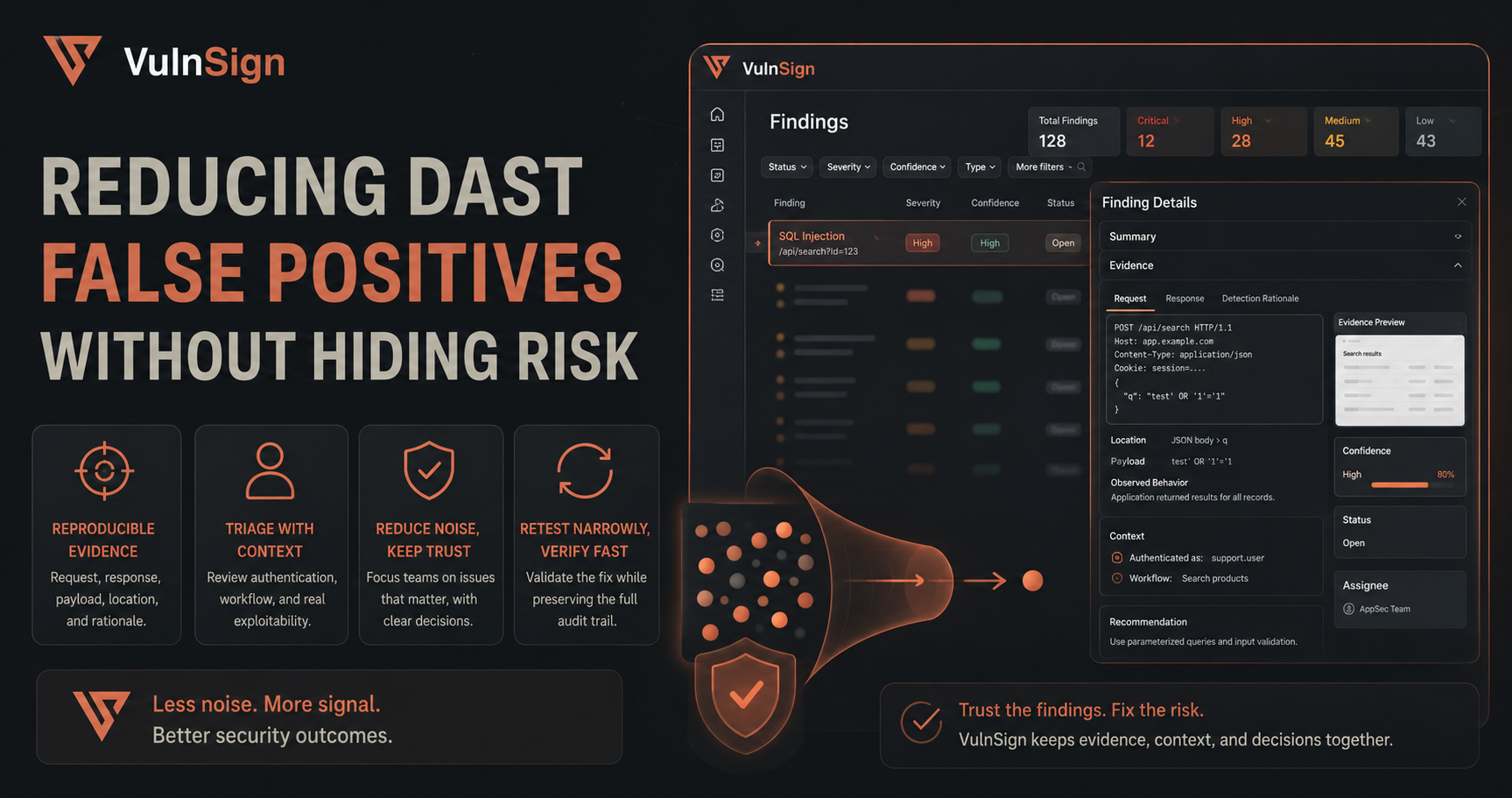
Noise is an operating problem
A finding can be technically plausible yet lack enough evidence for a developer to act. Large unactionable queues weaken trust in security tooling and make real risk harder to see.
Require reproducible evidence
Capture the affected request, relevant response behavior, payload, location, and detection rationale. Evidence should explain what changed and how another tester can repeat the observation without exposing unrelated secrets.
Triage with context
Confidence is not the same as severity. Review authentication state, business workflow, compensating controls, and whether the behavior is reachable by an attacker. Use manual tools to confirm uncertain cases and document why a result was accepted, changed, or dismissed.
Retest narrowly after remediation
A focused retest provides faster feedback than repeating an entire assessment. VulnSign keeps issue state and testing context together so teams can validate the fix while maintaining the original audit trail.
Related Articles
Explore more insights, strategies, and perspectives related to this topic.


Questions before you scan?
Learn how VulnSign fits into your environment, security workflow, and team.

Put automated and manual testing in one workflow.
See how VulnSign helps your team discover more attack surface, validate risk, and move findings to remediation—without sending security data to a cloud control plane.