API Security Testing for Modern Web Applications
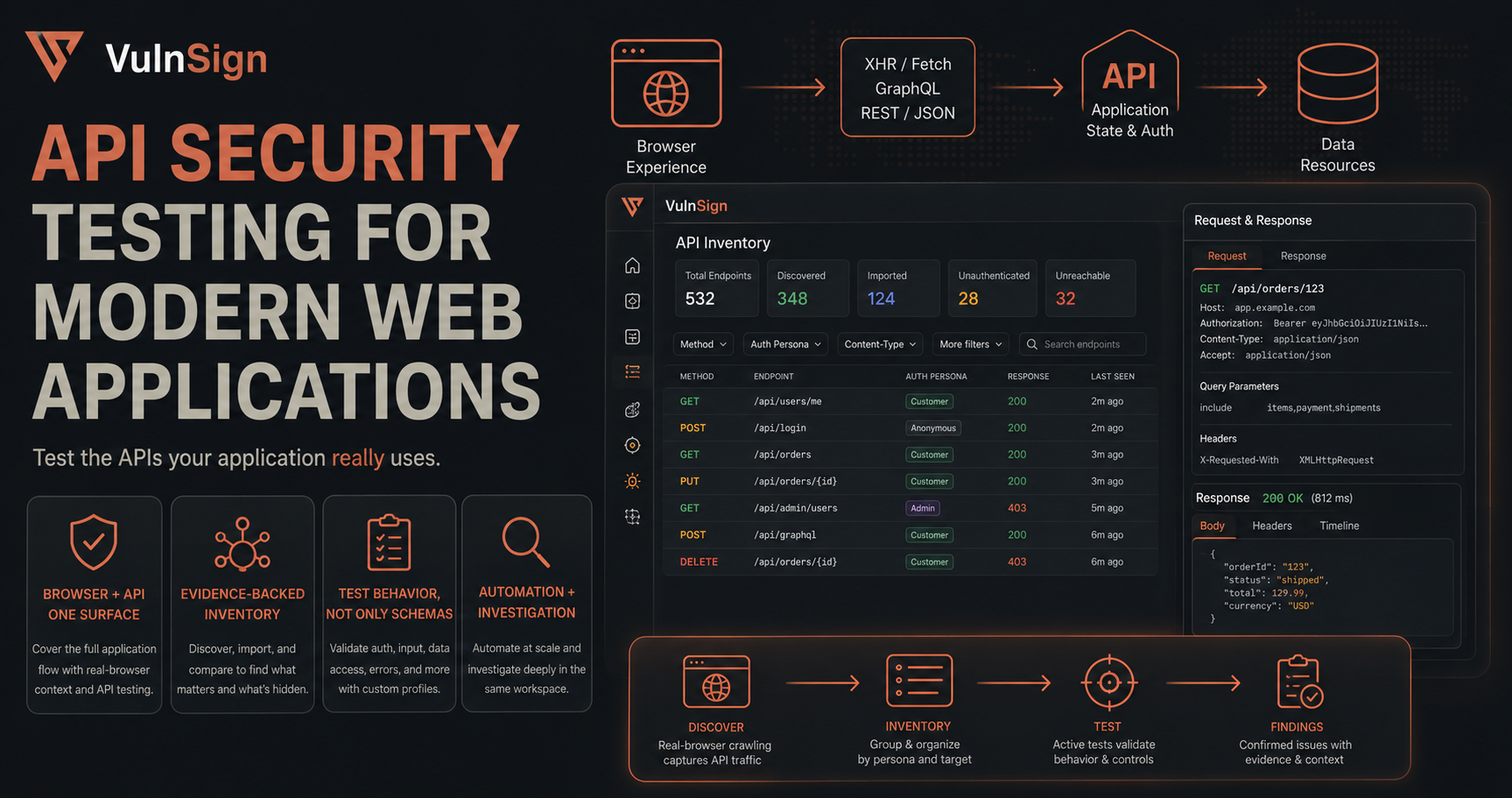
The browser and API are one attack surface
Modern interfaces continuously call JSON, GraphQL, and other HTTP APIs. Testing only rendered pages or only an API specification can miss authorization context and behavior created by the complete application flow.
Build an evidence-backed inventory
Observe API requests during real-browser crawling, import known endpoints where appropriate, and group requests by target and authentication persona. Compare discovered traffic with the expected inventory to identify undocumented or unreachable operations.
Test behavior, not only schemas
Validate authorization boundaries, object access, input handling, rate-sensitive workflows, content types, and error behavior. Custom profiles and payloads help adapt tests to the application instead of relying on one generic policy.
Combine automation with investigation
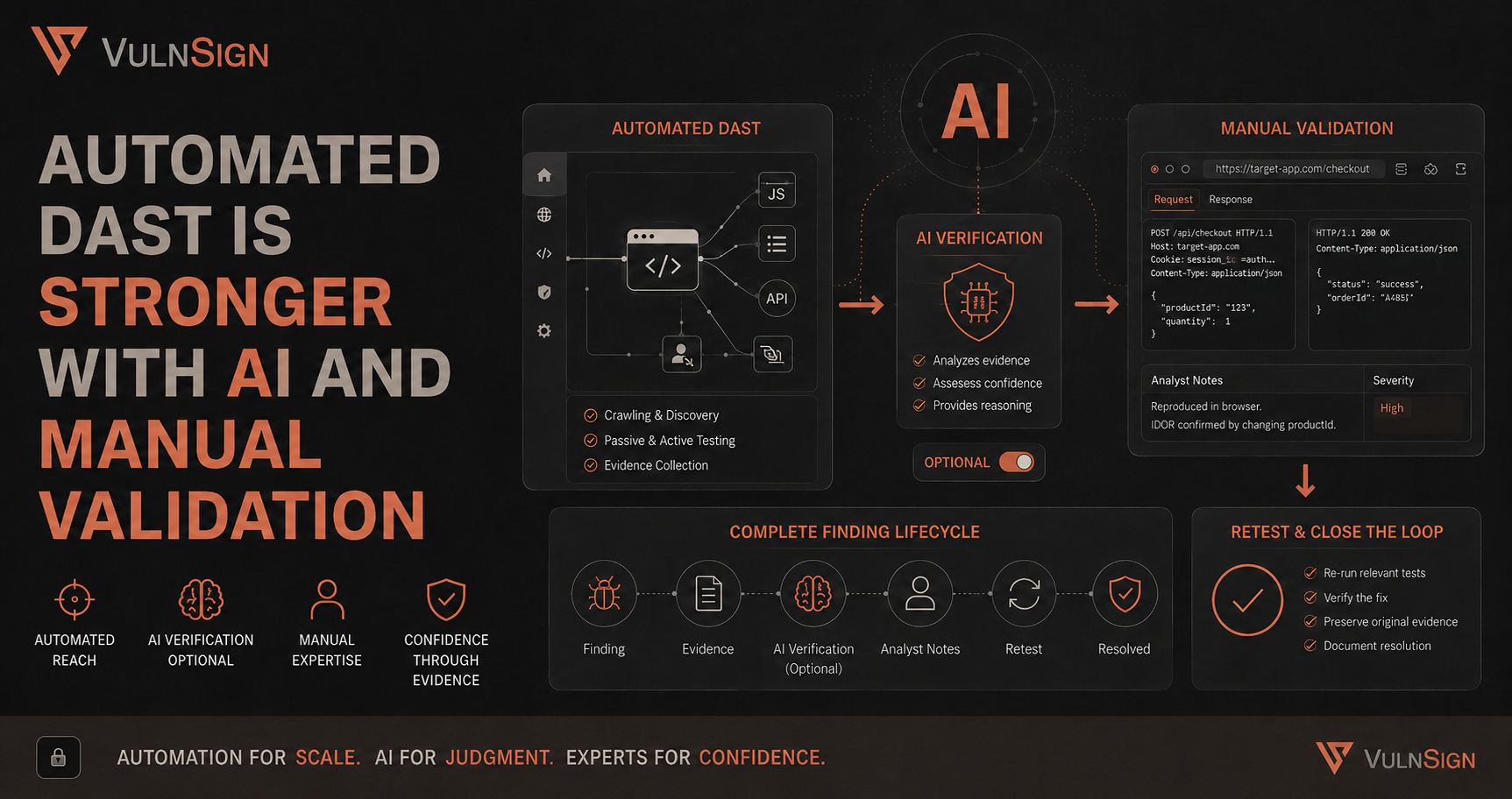
Automation finds repeatable patterns at scale; proxy history and manual request tools help engineers vary parameters and confirm impact. Keep both activities in the same workspace so confirmed findings retain their origin and evidence.
Related Articles
Explore more insights, strategies, and perspectives related to this topic.
Questions before you scan?
Learn how VulnSign fits into your environment, security workflow, and team.

Put automated and manual testing in one workflow.
See how VulnSign helps your team discover more attack surface, validate risk, and move findings to remediation—without sending security data to a cloud control plane.